Can an Emergency Dentist Fix a Cracked Molar the Same Day?

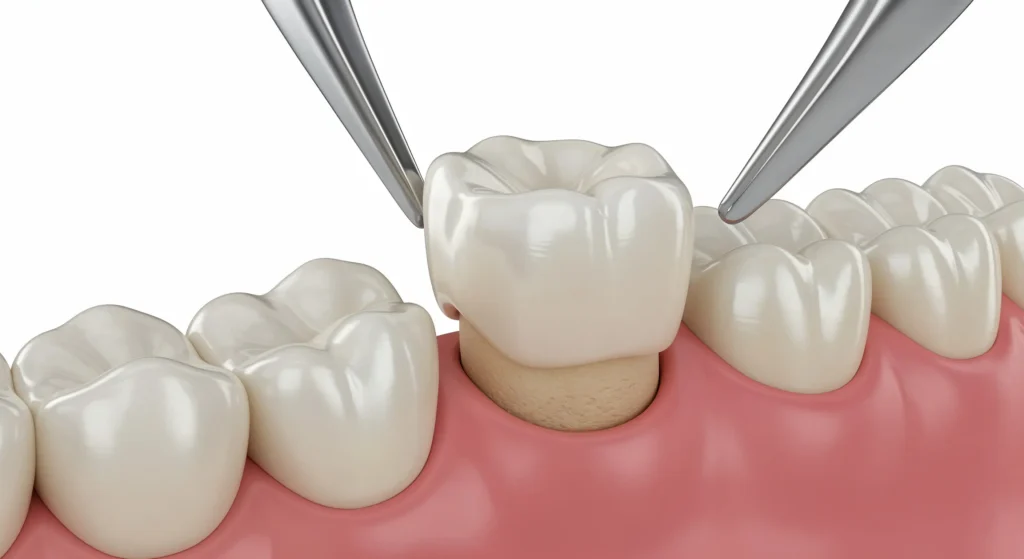

A cracked molar can go from annoying to alarming in a matter of hours. One minute you are chewing on a crust of bread or a handful of nuts, the next you feel a sharp zing, a rough edge with your tongue, or a deep ache that seems to pulse into your jaw. Patients often ask the same urgent question when they call: can an Emergency Dentist fix it today, or is this going to turn into a drawn-out problem?
The short answer is yes, often they can do something meaningful the same day. The longer answer is that "fix" can mean several different things. Sometimes the tooth can be permanently restored right away. Other times the same-day treatment is designed to stabilize the tooth, control pain, prevent further splitting, and buy enough time for the best final repair. The right approach depends on how the molar cracked, how deep the crack runs, whether the nerve is involved, and how much healthy tooth structure is left to save.
Molars are sturdy teeth, but they also take the brunt of the workload. They absorb the pressure of grinding and chewing, and they are common sites for fractures. A back tooth with a large old filling, hidden decay, or years of clenching is especially vulnerable. When it gives way, it rarely does so politely.
What counts as a cracked molar, and why the answer matters
Not every crack is the same, and dentists do not treat them as if they were. A small craze line in enamel is very different from a split that extends into the root. Patients tend to use one term for all of it, but clinically there are important distinctions.
A superficial hairline mark may not need immediate intervention at all, especially if there is no pain and the tooth remains structurally strong. A fractured cusp, which is common in molars with big fillings, can often be smoothed, bonded, or built up the same day if the break is accessible and the tooth stays dry enough for the material to bond properly. A deeper crack that causes pain when biting, especially when releasing pressure, raises concern that the fracture extends into dentin and may be affecting the pulp, the living tissue inside the tooth. If the crack splits the tooth into separate segments or runs below the gumline, the options narrow quickly.
This is why two people can both say, "I cracked my molar," and walk away from their appointments with completely different treatments. One leaves with a bonded restoration and feels normal by dinner. The other leaves with a temporary crown, antibiotics only if truly indicated, pain management advice, and a referral plan for root canal treatment or extraction. Same complaint, very different realities.
What an emergency visit usually accomplishes
A same-day emergency dental appointment is designed first to answer three practical questions. Is the tooth savable? Is the pain coming from exposed dentin, an inflamed nerve, or infection? What can be done now to protect the tooth from getting worse?
An experienced Emergency Dentist does not rush straight to "fixing" the tooth without understanding the crack pattern. That is how minor fractures become major ones. The appointment usually begins with a close exam, bite testing, and dental X-rays. X-rays do not always show a crack clearly, especially if the fracture line runs in a direction the film cannot capture, but they can reveal surrounding clues such as decay, a failing filling, bone changes, or root involvement. Many offices also use transillumination, magnification, or a dye to help visualize the crack.
From there, same-day care often falls into one of several categories.
If the broken area is small and the pulp is calm, the dentist may place a filling or bonded buildup immediately. If a cusp broke off and the remaining tooth walls look strong enough, that can be a very satisfying same-day repair. Patients often walk out relieved because the jagged edge is gone, chewing pain is reduced, and the tooth feels usable again.
If the tooth needs more coverage to prevent it from splitting further, the dentist may prepare it for a crown and place a temporary crown that day. That is common when the crack is substantial but the tooth is still restorable. The temporary is not just a placeholder. It acts like a splint, wrapping the tooth and reducing flex under biting pressure. Many patients feel noticeably better once that mechanical stress is controlled.
If the crack has reached the pulp and the tooth is intensely painful, same-day treatment may involve opening the tooth to relieve pressure, starting root canal treatment if the office is equipped for it, or sealing the area and scheduling definitive treatment very soon. Some general dentists handle this comfortably. Others stabilize the tooth and coordinate with an endodontist.
And if the tooth is vertically split or fractured beyond repair, the same-day fix may be extraction. That sounds disappointing, but there are situations where removing a non-restorable molar is the most honest and effective emergency care. Keeping a hopeless tooth in place for days or weeks can increase pain, invite infection, and make the eventual treatment more complicated.
When a cracked molar really can be repaired in one visit
The best candidates for complete same-day treatment are teeth with localized damage and enough sound structure left to work with. A cleanly broken cusp above the gumline is often manageable in one appointment. So is a tooth with a lost filling and a small crack that has not spread into the root or pulp. In those cases, a skilled dentist can remove weak structure, check for hidden decay, shape the tooth, and place a direct restoration or temporary protective coverage.
Whether the final restoration can be completed that day depends partly on the office setup. Practices with same-day CAD/CAM crown systems may prepare, scan, mill, and cement a crown in a single visit if the crack pattern is favorable and the tooth remains symptomatically stable. In a conventional office, the same tooth might receive a temporary crown first, then a permanent lab-made crown a week or two later. Both approaches are reasonable. The difference is logistics and technology, not necessarily quality.
I have seen patients come in after biting on olive pits, popcorn kernels, ice, or hard seeded crackers, convinced they had "shattered" a tooth, only to find a single fractured cusp that could be rebuilt with a very predictable result. I have also seen molars that looked modestly chipped from the outside but turned out to have a crack extending below the gumline. The surface appearance can mislead you.
When same-day care is more about stabilization than final repair
There is a common misunderstanding around emergency dentistry. People hear "same-day" and imagine a permanent solution every time. In reality, emergency treatment is sometimes like setting a broken wrist in the emergency room. The first goal is to stop the immediate damage and pain. The full treatment may still follow.
That is especially true if the tooth is difficult to numb because the pulp is severely inflamed, if there is swelling that limits treatment options, if the crack extends under the gum and needs further evaluation, or if the patient arrives late in the day with a complex fracture. Good emergency care is not about doing everything possible in one sitting. It is about doing the right things in the right order.
A temporary crown, a sedative filling, selective reshaping of a biting surface, or a bonded splinting approach can all be useful same-day measures. They may not look dramatic to a patient who expected a finished crown by the end of the visit, but they often make the difference between a salvageable molar and one that breaks further overnight.
Signs the crack may be more serious
Some symptoms suggest the problem is deeper than a simple chip.
- Sharp pain when biting down or when releasing your bite
- Sensitivity to cold that lingers rather than fading quickly
- A swollen gum area near one root of the tooth
- A tooth that feels mobile, or like two pieces are moving independently
- Pain that wakes you at night or throbs without chewing
None of these signs proves the tooth cannot be saved, but they raise the stakes. A lingering cold response may point toward irreversible pulp inflammation. A narrow swollen area near the gum can sometimes indicate a crack extending toward the root. Mobility in separate segments is particularly concerning. In those cases, an Emergency Dentist can still help the same day, but the visit is less likely to end with a simple filling and more likely to involve protective, diagnostic, or endodontic treatment.
The role of the nerve, and why pain can change the plan
Pain from a cracked molar is not always proportional to the size of the visible break. A tiny crack can produce severe symptoms if it irritates the pulp. Meanwhile, a larger piece can break off from a non-vital tooth with very little pain. That is why diagnosis matters more than appearances.
If the pulp is inflamed but not irreversibly damaged, sealing the crack and stabilizing the tooth may calm things down. If the pulp is already compromised, the tooth may need root canal treatment before it can be crowned. Patients often worry that needing a root canal means the tooth is doomed. It does not. Many cracked molars do very well for years after root canal therapy and proper full coverage, provided the crack does not extend into an unsalvageable area.
The challenge is that no dentist can responsibly promise the full prognosis on a first glance. Sometimes the tooth tells its story only after the old filling is removed or after the crown is https://knoxszgp881.image-perth.org/when-children-need-an-emergency-dentist-a-parent-s-guide placed and symptoms are monitored. Dentistry involves judgment under uncertainty, and cracked teeth are one of the most classic examples.
What determines whether the molar can be saved
The decision usually rests on a handful of practical factors: how deep the crack goes, whether it reaches below the gumline, whether the root is involved, how much tooth remains, whether the tooth can be predictably restored, and whether symptoms improve after stabilization.
The phrase "cracked tooth syndrome" exists for a reason. Some teeth live in a gray zone. They hurt on biting, the crack is suspected but not fully visible, and the tooth appears technically restorable. In those cases, dentists often recommend crown coverage because a crown braces the tooth and reduces flexing. If symptoms settle, that supports the diagnosis and the prognosis improves. If pain persists, root canal treatment may still be needed later. That does not mean the crown failed. It means the pulp had already suffered more than the initial exam could confirm.
When a crack clearly divides the tooth vertically into separate sections or tracks well down the root, saving it becomes much less likely. A molar cannot function long term if its foundation is split. Some isolated root fractures in multi-rooted molars can be managed with advanced treatment in selected cases, but those are exceptions rather than the rule.
What to do before you get to the office
The hours before treatment matter. It is easy to make a cracked molar worse with one careless meal or by testing it over and over with your tongue.
Here are the sensible steps while you wait to be seen:
- Avoid chewing on that side, especially anything hard, sticky, or crunchy
- Rinse gently with warm salt water to keep the area clean
- Use a cold compress on the outside of the face if there is swelling
- Take an over-the-counter pain reliever if you normally can, following the label
- If a piece has broken off, bring it with you, though it often cannot be reattached
Do not place aspirin against the gum. It will not help the tooth and can burn the tissue. Do not keep biting on the tooth "to check it." I have seen patients turn a repairable cracked cusp into a more complex fracture simply by continuing to chew through the day because the pain came and went.
Why molars crack in the first place
The immediate trigger is often obvious, biting something hard or clenching during a stressful week, but the root causes are usually cumulative. Large amalgam or composite fillings weaken the remaining cusps over time. Repeated thermal changes from hot coffee followed by ice water do not help. Night grinding applies heavy lateral forces that natural enamel tolerates only up to a point. Age matters too. Teeth become less forgiving as they dehydrate slightly and absorb years of microstress.
A common pattern is the heavily restored lower first molar in a patient who says, "It never gave me trouble until now." That tooth may have been carrying a wide filling for 15 years. One stubborn piece of granola is simply the final insult, not the full story.
This is also why prevention after the emergency matters. If a patient breaks one molar from grinding and no bite protection is addressed, it is not unusual for another tooth to fail later. Emergency treatment should solve the immediate problem, but the best dentists also look at the bigger picture.
The question patients really mean: will I leave out of pain?
Often, yes, or at least much more comfortable than when you arrived. Same-day relief is one of the biggest strengths of emergency dental care. Smoothing sharp edges, sealing exposed dentin, reducing an interfering bite contact, placing protective coverage, draining localized infection when appropriate, or beginning pulp treatment can all reduce symptoms significantly.
That said, cracked teeth can remain sore for a few days even after excellent treatment. Biting tenderness is especially common if the ligament around the tooth has been inflamed by flexing or trauma. Patients do better when this is explained clearly. They are less alarmed by ordinary healing discomfort and more likely to recognize signs that need a prompt recheck.
A thoughtful Emergency Dentist usually sets expectations with some nuance. You may feel immediate relief from the jagged edge and cold sensitivity. You may still need to chew softly for several days. You may need a crown soon even if the temporary fix feels fine. You may need root canal treatment if symptoms evolve. That kind of honesty builds trust because cracked molars do not always follow a perfectly tidy script.
The cost question, and why same-day does not always mean cheaper
People understandably ask about cost when an emergency comes out of nowhere. A simple bonded repair is usually less expensive than a crown, and a temporary stabilization visit may cost less upfront than definitive treatment. But the least expensive first step is not always the most economical long term.
For example, rebuilding a badly weakened molar with a large filling when a crown is clearly indicated may feel cheaper today, but if the tooth fractures further in two months, the overall cost can climb fast. On the other hand, not every cracked molar needs a crown. Conservative care is appropriate when the crack is limited and the tooth is structurally sound. The art is knowing the difference.
Insurance coverage varies widely, especially for emergency exams, imaging, crowns, and root canal treatment. It helps to ask the office not just what they can do today, but what they expect the full course of care may involve if the tooth responds as hoped, and if it does not.
Aftercare can make or break the result
Once the tooth is treated, what you do over the next week matters. A temporary crown is not permission to go eat toffee. A newly bonded tooth should not be stress-tested on hard foods that night. If the dentist tells you the final prognosis depends partly on how the tooth responds under reduced load, listen to that. It is good advice.
Soft chewing, avoiding that side initially, keeping the area clean, and returning promptly if the bite feels high or the temporary loosens can preserve a good result. If a night guard is recommended because clenching likely contributed to the crack, that is not an upsell in many cases. It is part of protecting the investment you just made.
So, can an Emergency Dentist fix it the same day?
Very often, yes, at least in the way that matters most at the time. They can usually diagnose the problem, relieve pain, protect the tooth, and in many cases complete the repair that same day. For smaller fractures and fractured cusps, a true one-visit fix is common. For deeper cracks, same-day treatment often means stabilization, temporary coverage, or the first phase of root canal or restorative care.
The more useful way to think about it is this: an emergency dental visit should move the situation decisively in the right direction. It should reduce pain, lower the risk of the crack spreading, and give you a clear picture of whether the molar needs bonding, a crown, root canal treatment, or extraction. With cracked molars, speed matters, but judgment matters more. The best same-day care is not always the fastest repair. It is the treatment that gives the tooth its best chance of surviving.
Simple Dental South Gate
Address: 8617 California Ave, South Gate, CA 90280
Phone number: +13236896118
FAQ About Emergency Dentist Southgate CA
What can the ER do for a tooth?
The emergency room can provide temporary symptom relief for a bad tooth, such as prescribing pain medicine or antibiotics, but it cannot fix the actual dental problem.
What is the 3-3-3 rule for tooth infection?
The 3-3-3 rule for a toothache or infection typically means taking three 200 mg ibuprofen tablets (600 mg total) three times a day for no more than three days to control pain and swelling while waiting to see a dentist.
What do you do if you have a dental emergency but no dentist?
If you have a dental emergency and no regular dentist, you should search for an urgent care dental clinic, call local walk-in dental offices, or go to a hospital emergency room if you have severe bleeding, swelling, or trouble breathing.